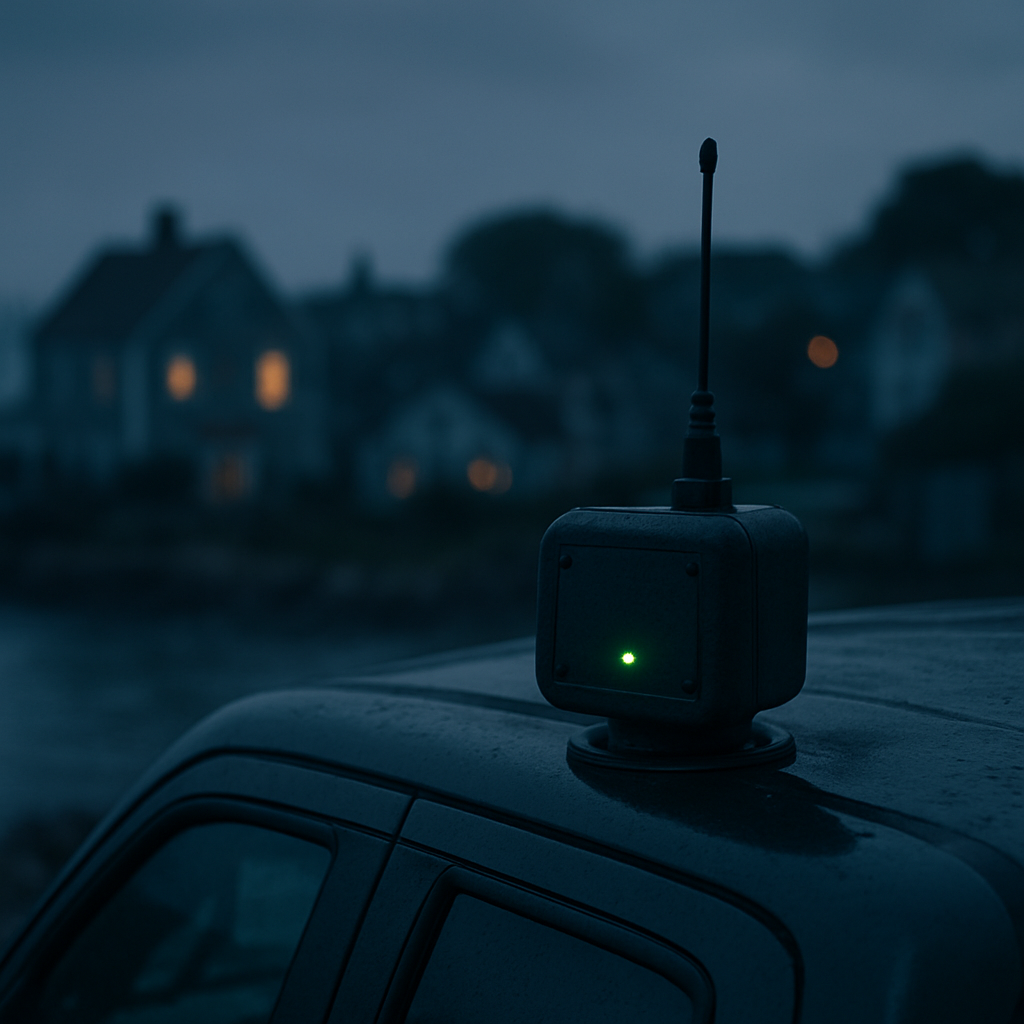
Build the neighborhood mesh that stays alive when the grid goes dark
Sign up free, drop your pin, and watch the physical safety grid form on the map before any hardware ships. Residents pay $0/mo — own a Baseline Device for $135.
All fp Mesh Networks are connected by the same radio-cellphone hybrid app.
See how the mesh keeps your block connected in an emergency →
Your phone is the first node
When the towers go dark, the smartphone already in your pocket keeps working on the mesh. Drop a free pin and your device becomes part of the neighborhood network tonight — the optional $135 Baseline Device simply extends its reach.
Works without service
No cell signal, no Wi-Fi, no problem. Your phone still sends and receives text on the local mesh when the grid is down.
Hops phone to phone
Messages relay device-to-device over short-range Bluetooth and Wi-Fi Direct, so each neighbor's phone passes the signal a little farther.
Transponder extends range
Add the optional $135 Baseline Device once your zone hits density to bridge phone clusters across the whole neighborhood.
The Pre-Order Radar
Every free signup lights up a node. Watch the mesh grid form across the Cape and beyond.
Lower Cape Cod
FormingPrecedent for mesh reliability, not a description of our deployment
The National University of Singapore, StarHub, ComfortDelGro Bus, and Veniam ran a vehicular wireless mesh pilot at the Kent Ridge campus: on-board units across a fleet of shuttle buses relayed data hop-to-hop when a bus fell outside a fixed node's range, blending DSRC, LTE, and Wi-Fi to keep connectivity intact — later extended to support outdoor connectivity for seniors and IoT health monitoring. That pilot demonstrates multi-hop mesh relaying holds up under real-world mobility, which is a harder problem than Folio-Pin's largely stationary phone-to-repeater network. It is evidence that the underlying relay approach works in the field, not a claim that Folio-Pin's own mesh has been deployed or validated at that scale.
When the next storm hits, search results change overnight.
Every time a major storm, flood, or hurricane hits a region, homeowners flood Google with searches for roofers, emergency contractors, and disaster response services. The contractors already indexed on folio-pin surface immediately — the ones who signed up after the storm do not.
Pre-indexed, pre-trusted
Folio-pin contractor profiles are already in Google's index with verified location data, permit history, and completed job records. When a homeowner in your town searches 'roof repair after storm' at 11pm, you're already there.
Search volume spikes 10–40×
Local searches for emergency contractors, water damage repair, and tree removal spike sharply in the days after a storm event. folio-pin's verified trade map captures that surge because the data is already structured for local search.
The mesh keeps you reachable
When cell towers go down after a storm, the mesh network keeps neighborhood communication alive — and keeps your contractor listing reachable even when the broader internet is degraded.
What happens in the 48 hours after a storm
Storm hits
Hour 0
Power restored
Hours 2–8
Search surge begins
Hours 4–12
Verified contractors get calls
Hours 6�����24
Marine safety concept
Marine Aquaculture & Fleet Safety
Lobster trap mapping, ropeless gear syncing, and right whale mitigation for the fleet, plus shark detection and deterrent coordination for swimming areas—one unified mesh.
Fleet & Group Packages
From a single wristband to a district-wide fleet — choose the tier that matches how many people you need to protect.
Family & Friends Defense Circle
$499 upfront, one-time
3x long-range transponder nodes + 2x wearable pendants — enough to cover a household and the people you check on most.
How the rollout works
1. Free digital foundation
Residents, artists, and food trucks sign up free and drop pins. Costs you nothing — the cloud maps the exact coordinates of the user base.
2. The hardware waiting queue
Reserve a Window Repeater or Mobile Transponder. The radar lights up with where the grid is forming before any hardware ships.
3. Batch-shipping cadence
When a zone hits critical density (20 residents + 5 food trucks), the cell is authorized and reservations become payable.
4. The Resident Shield
Pay $0 in ongoing fees. Order a Baseline Device for $135. You own the hardware, you own your data, you keep the lifeline alive.